
Honey bees remain essential to Australian horticulture. Managed hives are familiar, mobile and central to many crop-pollination programs. The commercial opportunity is to strengthen that system by adding other managed pollinators, giving growers more options when planning for flowering.
The need for additional options is becoming more immediate. Australia’s Pollination Security Status Report 2026 identifies Varroa mite, hive supply and rising demand as system-level risks. Its scenario modelling indicates a potential shortfall of around 290,000 commercial hives during peak pollination periods under the most likely future settings. ABC Rural has also reported industry concern that Varroa-related hive losses and beekeeper exits could leave insufficient bees for some crops. This does not diminish the role of honey bees; it strengthens the case for earlier planning and a more diversified pollination supply.
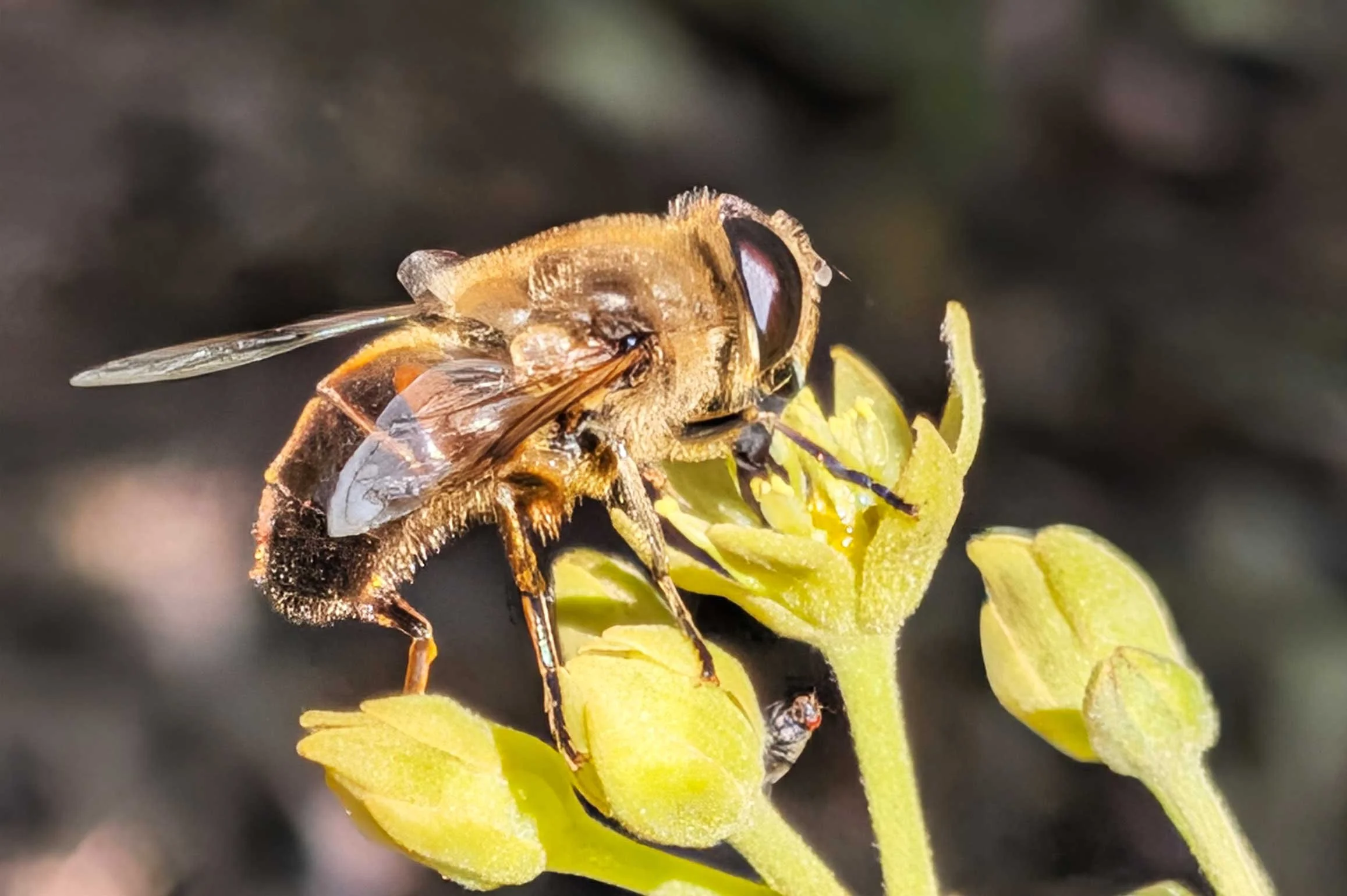
A growing body of research shows that managed flies can add useful, crop-specific pollination capacity—particularly when growers need greater diversity, protected-crop suitability or another option alongside hives.
Flies are already important flower visitors in natural and agricultural systems. A global synthesis of 39 field studies across five continents found that non-bee insects made 25–50% of recorded crop-flower visits. Although they were often less effective than bees on a single-visit basis, their greater visitation meant that their overall pollination contribution was similar. Importantly, non-bee visitation increased fruit set independently of bee visitation, indicating a complementary benefit rather than simple duplication.
That broad evidence is now being strengthened by crop-specific studies. Australian research published in 2026 examined managed flies on commercial berry farms. European drone flies, Eristalis tenax, produced fruit comparable in weight and marketability to honey bees and native stingless bees in replicated cages. In commercial polytunnels, the same species produced market-quality blackberry fruit across spring and winter conditions. The blowfly tested in that study performed more variably, reinforcing an important lesson: results cannot be generalised from “flies” as one group. Species, crop, season, production system and release density all matter.
Avocado research in Western Australia reaches a similar conclusion. Multi-year enclosure studies have shown that E. tenax and Calliphora dubia can pollinate Hass avocado trees. The work also found that simply releasing more insects did not continue to increase pollination, highlighting why release density and field protocol are critical to pollination success.
Other studies have reported hoverfly pollination benefits in strawberries, mangoes, melons and canola. Taken together, the literature supports a credible role for managed flies—but it also shows why growers need a crop-specific program rather than a generic insect product.
What this means for growersPollination diversification gives growers another way to manage their flowering season. Depending on the crop and environment, managed flies may help protect against hive supply gaps, increase functional diversity and provide an option for greenhouse, tunnel or netted production. The sensible starting point is not necessarily full replacement. A grower can begin with a practical proportion of the planned hive allocation and build evidence under their own conditions.
Arvela applies more than a decade of commercial insect-production experience to managed pollination. Four pollinator species are available for order, supported by crop-specific recommendations based on published evidence, production capability and Australian field deployments.
Early planning is highly recommended! . Growers planning for 2027 should speak directly with Arvela to assess fit and available capacity asap.
Secure your 2027 pollination allocation:
arvela.com.au/pollination | pollination@arvela.com.au | 0408 900 591
Sources and Further Reading
Rader et al. 2016. Non-bee insects are important contributors to global crop pollination.
Cook et al. 2025. Pollination of enclosed avocado trees by blow flies and a hover fly.
Hodgkiss et al. 2018. Syrphine hoverflies are effective pollinators of commercial strawberry.
Wheen Bee Foundation. 2026. Pollination Security Status Report 2026. Read the report summary
ABC Rural. 2026. Not enough bees for crop pollination as parasite takes over. Read the article
Pollination Diversification Is Now Commercially Available
Previous
Previous
Arvela Completes 2026 Commercial Pollination Deployments.
Next
Next